My mother describes where she grew up as “…lily white Granite City, Illinois.” Which makes sense as she was born in the 1950s and Granite City had been a sundown town until sometime in the 1960s. I distinctly remember her mother, who had grown up in the same town, told me that a black family had moved in once and their kids went to her school for ONE DAY, after which they decided that they didn’t like it and moved out again. Even as a child this was baffling to me, and I pressed her on why that would have been. That it wasn’t normal for people to move to some place for one day. My grandmother was nonplussed and insisted that it was perfectly normal and “they just didn’t like it.” So, later, when I inherited the stack of records retained from my mother’s and her parents’ collections it wasn’t surprising that the only black faces in the set were from the one Supremes record my mother had. There was distinctly black music and white music, and in polite society those didn’t mix unless the black artists were sanitized for the protection of white people.
Now, I’m not taking a dig at The Supremes, or Motown records. I cherish that Supremes record and am grateful to my mother for being able to pass it to me. But Motown Records in the 1960s is a great example of music written and performed by black artists that was safe for white people of the time to engage in.
From it’s very beginning, Rock & Roll was segregated away from black artists. Jimi Hendrix and Sly Stone were exceptions to the rule. In fact, in all the years I listened to classic rock radio I don’t think I ever heard a Sly & The Family Stone record. Too black? Probably so. Jimi’s music never really ventured into the overtly political realm the way Sly’s did. Jimi didn’t upset the apple cart outside of his playing technique, which of course, is what got him on classic rock radio to begin with.
What’s interesting to me is that as time progressed from the 60s, to the 70s, to the 80s, etc., that musical genre resisted integration. Pop music fully integrated, but you were more likely to get white R&B acts than black Rock & Roll acts (exceptions exist, of course). And then, in the 80s you find the rise of hip-hop, which has always been a predominantly black genre due to the cultural origin of the form. It has been rumored that most rap music, and specifically gangsta rap, was actually being bought by white audiences. However, that idea seems to have little credence. Over time, this lack of integration became tradition and felt normal, and tradition is much easier to sell than art. This is another example of genre being a fabricated category to more easily sell products than a natural cultural phenomenon.
The most glaring example in this idea of traditional music segregation comes out of the Folk and Country traditions. The very notion of folk music is that it can come from anyone anywhere at any time, but generally this music comes from rural or agrarian societies or tribal traditions. It generally doesn’t come from urban industrialized regions. What we know today as “Country” music takes its origin from the rural traditions in Appalachia, the American deep south, Texas, and the American southwest in the 19th and early 20th centuries. European settlers, especially from Ireland, Scotland, and England, brought with them their folk songs, traditions, and instruments. These sounds became blended with the surviving musical traditions of Africa from the freed slaves and their progeny. Still more integration came from the Mexican traditions out west. Remember, that the full name of “Country” music is “Country & Western.” “Western,” in this context, primarily means Mexico with its blend of indigenous and Spanish musical traditions.
This music was composed of ballads, love songs, and songs reflecting the realities of life in rural and agrarian communities. It was about common struggle and personal struggle. What came later to be known as “Blues” music originated here, too. Not in the smokey bars of New Orleans or Chicago, but the sharecropper’s fields of the deep south. At its beginning, Blues music WAS country music. It only became “Blues” when it moved to the city.
As this music began to be recorded in the 20th century, music from non-white artists were relegated to “race music” labels, while white artists took up space in the rest of the industry. This is when “Country & Western” music really became a genre, again, a segregated category to sell to white audiences. This period in history coincides with The Great Migration, when large numbers of African Americans moved out of the agrarian south to the northern industrial areas. From which, Jazz and Blues as we know them developed and flourished. But by no means was that migration 100%, and those who stayed did not give up their musical traditions. Black people have always enjoyed and played Country music in any number of styles.
Country music remained largely in these traditions until the 1960s when it took a more political turn in response to the social changes occurring at the time. To this day, the genre remains nearly exclusively white. Prior to Darius Rucker’s success in the early 21st Century, the most successful black country music star was Charlie Pride, who presented as an unthreatening black voice in the 1970s, much like Nat King Cole did in jazz in the 1950s. Again, you have exceptions allowed in, so long as the boat wasn’t rocked.
More recently, you are seeing black artists beginning to reclaim and integrate country music into contemporary compositions. Lil Nas X and Shaboozi have made waves mixing hip-hop and country sounds. Beyonce made a huge splash earlier this year with the release of COWBOY CARTER, a record I thoroughly enjoyed. With any of these three examples, you have gatekeepers harping loudly about whether or not the music is “really country” or about the authenticity of the artist.
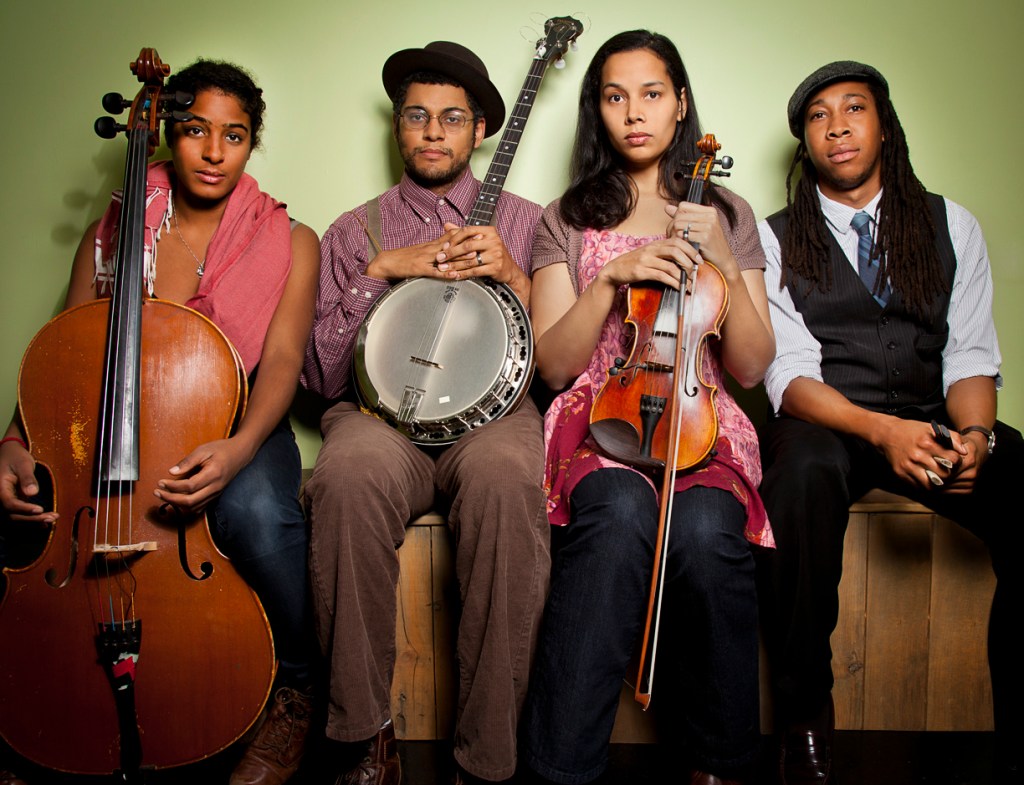
Moving a little further out of the pop scene, though, you have black artists who have become critical successes, if not yet household names, and are making music solidly in the country realm. Firstly, there is Rhiannon Giddens (and her previous band, Carolina Chocolate Drops) whose literal and metaphoric voice is deeply rooted in Appalachian-style country music and that of the American southeast. Then there is The War and Treaty, a black married couple from Detroit who are “slinging country soul” with sufficient force that they’ve been nominated for a Best New Artist Grammy in this year’s event (even they’ve put out four strong records since 2017). Then there’s Chapel Hart, who were a golden buzzer recipient on America’s Got Talent and finished in 5th place. Chapel Hart are doing nothing but traditional Nashville-style country music and have been largely ignored by mainstream country music despite the clear success and talent they possess. The only clear reason they are not a household name is the racist gatekeeping within country music.
There has never been a time when black people did not love and create country music. Rock & Roll was essentially a black-created musical form renamed to be sold to white people. The very nature of musical genre as we commonly understand it is rooted in Jim Crow racism that persists primarily because there is capitalist interest in maintaining these racist divisions in our culture, creating gatekeepers to preserve the perceived tradition to make it easier to sell products to a public too comfortable and ignorant to question what to them is normal.
 MusicHead
Leave a comment