
I’ve talked before about my musical heritage: 80s Pop, early 90s country, and a whole lot of Rock & Roll. Being the child of practical midwestern baby boomers, jazz music was an abstraction. It was something sophisticated city folk might listen to over martinis or existential philosophy discussions. It wasn’t real in any way. It wasn’t anywhere near my lived experience.
Tried as I did, I was never one with the culture of my youth. I was never able to connect with more than the fringes of that culture. I was always a misfit. As I got older and this chafed more and more I started to desire to grow beyond myself and my surroundings. At probably 17 years old, I decided that one of the ways I was going to do this was get into jazz music. Unfortunately, I has no idea where to start, and this was before the internet came into my life. That Christmas I had my parents get me CDs by Miles Davis and John Coltrane, because those were two names I knew. What I got was The Best of Miles Davis & Gil Evans and The Best of John Coltrane. My parents, bless their hearts, were just as blind in this errand as I was. That spring, while attending my girlfriend’s state music competition at Mizzou, I found a cheap double-CD set of Duke Ellington, another name I knew.
There! I had successfully forayed into jazz music. Now what? I knew no one who was knowledgeable of jazz, and this was four years before Ken Burns’ documentary came out. I was kinda stuck.
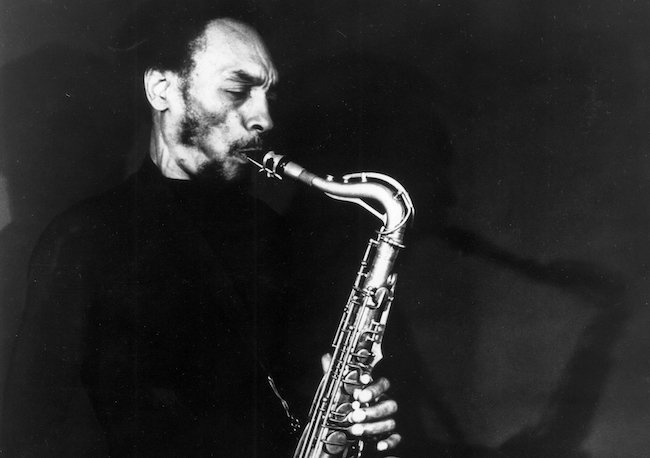
Fast forward to the next year. It’s 1998. I’m no longer in Festus, Missouri, but in Orlando, Florida, attending Full Sail Center for the Recording Arts (as it was known, then). We had a music history class that provided us a crash course in all the major forms of Western music, as well as some forays into non-western. When we were on the jazz unit, for one of the classes this skinny old black man was brought in to speak with us. He was mostly bald with the remains of a white afro sticking out from his head, and he wore a brightly colored and rather loudly patterned shirt. He was introduced to us as jazz legend Sam Rivers from the New York Loft movement.
I didn’t know what any of that meant, but for the next hour or so, Mr. Rivers spoke about his life in music; playing with Miles Davis; his wife, Beatrice; and generally about anything that came to him. The one quote I definitely remember was when he said, “I’m 73 years old and still considered Avant Garde, so, that’s pretty good.”
That week, we were treated with a free concert of him with his trio. Folks, I barely knew what jazz was, much less had ever experienced it in person. What happened to me that night was the second moment in my life of color being added to the world. The music was strange and compelling. It grabbed me from the first notes and did not let go. It was one of the few times in my life that I felt the push-pull of the room. The music informing the audience and the audience informing the music.
Nearly 30 years later I can’t remember exactly, but he would have played flute, clarinet, bass clarinet, tenor sax and baritone sax. He basically ran the gamut of woodwinds. And for added color, he’d occasionally just yelp like an animal if he felt inspired to do so. Not only was he playing for us, but I saw for the first time musicians playing with each other. Listening to and complementing each other. It was then that I understood the power of live music for the first time, and then that jazz became an integral part of my being.
Today, when I meet fellow jazz fans I eventually ask if they know about Sam Rivers, and the answer is typically, “No.” My impression is that Sam was always something of a deep cut. #IYKYK. He played with every heavy hitter in jazz from the 50s on: Miles, Dizzy, Herbie, etc. And he led or co-led groups on dozens of his own records. He led a trio, as well as his RivBea jazz orchestra. I was fortunate enough to see him perform with both. I suspect the disconnect between his reputation and recognizability stems from the fact that his prominence came during the 1970’s, when most people had moved away from jazz as a popular art form.
His recording career began in 1964 and continued until 2007. He was briefly a member of the Miles Davis Quintet and is featured on MILES IN TOKYO. His playing, though, was too Avant Garde for Miles, at the time (imagine that!) and he was later replaced by Wayne Shorter. In the 70s he, with his wife, Beatrice, was a major force in the New York Loft movement in which musicians would come together in loft spaces and push the boundaries if their craft together.
In the early 90s Sam and Beatrice moved to central Florida where they became an integral part of growing the jazz scene in and around Orlando. This is where I came into contact with him. He lived in the area until his death in 2011.
Stylistically, Sam ran toward the Avant Garde and free jazz styles, which can be hard for some people to digest. I think this also contributes to his lack of recognition by self-proclaimed jazz fans. Even I never pursued free jazz as an interest, preferring to stick with the straight ahead, cool, or bebop styles. But as I said above, Sam and his unique approach to jazz opened up a whole world to me I hadn’t known existed. And for that, I will be forever grateful.
 MusicHead
Leave a comment